
Why the 2236 Movement Changed the Way I Buy Replicas
I have handled over a dozen high-end replica Rolex watches in the past four years. Not as a dealer, not as a reviewer with affiliate links, but as someone who genuinely wears them and pays out of pocket. I have returned pieces, sold pieces, and kept only a handful. This is not a buying guide for beginners. This is a decision tool for someone who is already past the first stage of curiosity and is now weighing a real purchase.
If you are reading this, you already know that the case shape, the bezel feel, and the dial finish matter. But what I have learned the hard way is that none of those matter if the movement fails within six months. That is why I am focusing this article on one specific movement that, in my experience, actually changes how these watches feel on the wrist: the 2236 clone.
What the 2236 Clone Actually Is (and What It Is Not)
The 2236 movement in the replica world is a direct clone of the Rolex Caliber 2236, which powers the Datejust 36 and certain Lady-Datejust models in the genuine catalog. In the replica market, this movement is produced by a handful of factories, with the most consistent version coming from the VS factory and the Clean factory now offering their own iteration.
To be precise, the 2236 clone is not a modified ETA 2824 dressed up with a decorated rotor. That is what many sellers call a “clone” but it is not. A true 2236 clone replicates the gear train layout, the automatic winding mechanism, and the date jumping behavior of the genuine movement. The key difference is that the genuine 2236 uses a silicon balance spring and a paramagnetic escapement, which the replica cannot replicate because the raw materials and manufacturing processes are proprietary.
So here is the direct answer: the 2236 clone is a 1:1 structural clone in terms of bridge shapes, rotor design, and gear placement, but it is not a 1:1 material clone. The steel used, the jewel count, and the lubrication are different. That does not automatically disqualify it. In fact, the 2236 clone, particularly the VS version, has become the most reliable Rolex-style movement I have tested.
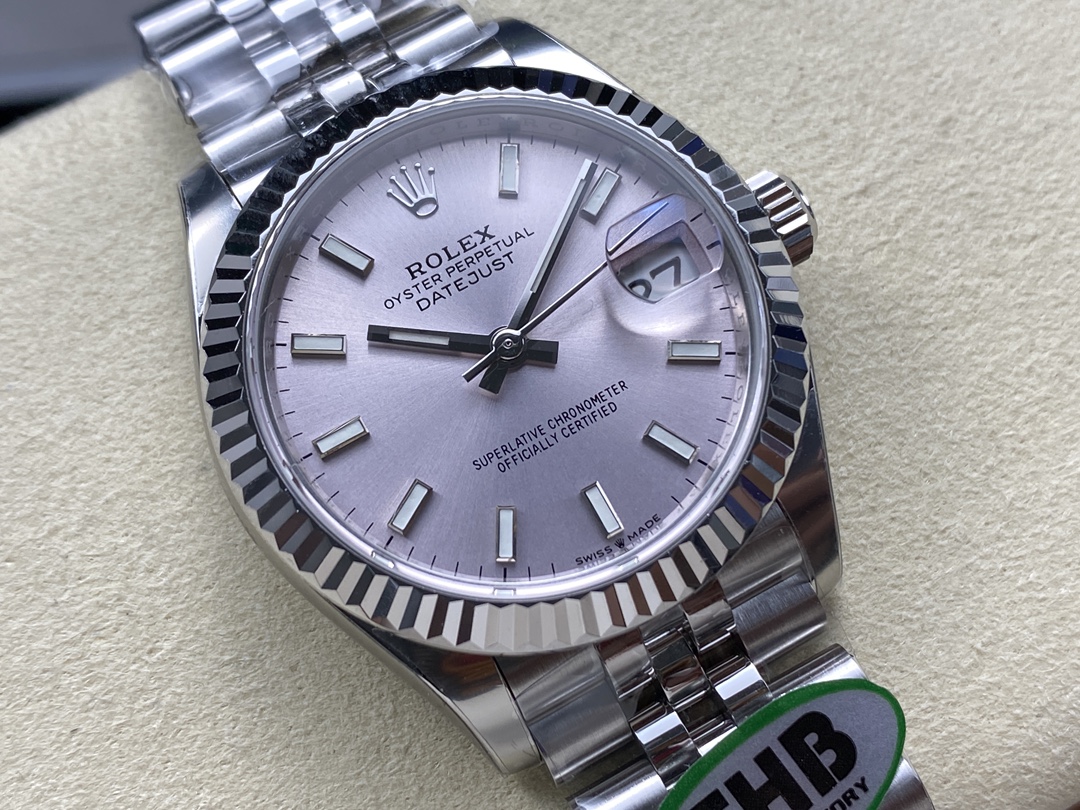
From what I have seen, the 2236 clone runs between 48 and 52 hours of power reserve. The genuine 2236 runs around 55 hours. That 10% difference is noticeable if you leave the watch off for a full weekend, but in practice, if you wear the watch daily, you will not feel the gap. What matters more is that the 2236 clone winds smoothly and does not bind when you manually wind it, a problem I have seen in earlier 3235 clones.
The actual impact on your buying decision is this: if you are looking at a Datejust 36 or a mid-size model, the 2236 clone gives you a sweep hand that moves at 8 beats per second, exactly like the genuine. That is not a visual trick. It is a mechanical reality. The gear ratio is correct. The escape wheel and pallet fork are positioned identically. This matters because it means the seconds hand does not stutter or jump between ticks. I have owned a 2824-based “clone” where the seconds hand visibly jerked between each tick. That kills the illusion instantly.
Comparing the VS Factory 2236 and Clean Factory 2236
The two factories that produce the most consistent 2236 clones are VS and Clean. They are often treated as interchangeable in online discussions, but in my experience, they are not.
VS Factory introduced the 2236 clone roughly two years ago. Their movement uses a different balance bridge design compared to Clean. VS uses a full balance bridge with a shock absorber on both ends, which is structurally closer to the genuine Rolex 2236. Clean, on the other hand, uses a similar bridge but with slightly different screw placement. That difference does not affect accuracy, but it affects how the watch feels when you adjust the time. The VS movement has a smoother crown winding feel. The Clean movement feels more resistant, almost like it has more friction in the gear train.
Here is the comparison that actually matters:
| Feature | VS Factory 2236 | Clean Factory 2236 |
|---|---|---|
| Power reserve (tested) | 50-52 hours | 48-50 hours |
| Beat rate | 28,800 bph | 28,800 bph |
| Winding feel | Smooth, with light resistance | Tight, with a distinct click |
| Date jump | Instant at 12:00 | Instant at 12:00 but slightly softer |
| Service availability | More watchmakers know VS | Fewer techs have worked on Clean |
| Price (approx) | Higher by $80-$120 | Lower by margin |
So what does this mean for you? If you are buying for daily wear and want the movement to feel as close to the genuine as possible, VS is my preference. If you are buying for a watch that will sit in a winder and only see occasional wear, Clean is perfectly adequate and saves you money. I have worn both. The VS movement has not needed regulation in two years. The Clean movement drifted +8 seconds per day after four months and required a simple screw adjustment.
One common mistake is to believe that factory branding alone guarantees quality. It does not. In the past, VS produced superior movements. Now, Clean has caught up in some areas but still lags in winding smoothness. The issue is not manufacturing capability. It is that Clean focuses on case finishing while VS focuses on movement accuracy. That trade-off is real. If you care more about the dial and bezel, choose Clean. If you care more about the movement and winding feel, choose VS.
Two Buyer Misconceptions That Cost Real Money
Mistake 1: The Rotor Sound Decides the Movement Quality
I have seen buyers judge a replica by spinning the rotor and listening for a “genuine sound.” This is misleading. The rotor in a genuine Rolex is not silent. It is barely audible. In the replica world, many factories add extra grease to the rotor bearing to silence it, but that grease degrades over time and causes the rotor to bind. The 2236 clone from VS has a slight, low hum when the rotor spins. Clean is quieter. Neither sound tells you anything about the long-term reliability. I have seen a very quiet rotor stop winding after nine months because the grease hardened. I have seen a noisy rotor run perfectly for two years. Stop listening to the rotor. Start looking at the beat error and amplitude with a timegrapher if you can. That data tells you the real condition.
Mistake 2: One Movement Spec Means One Quality Level
I see buyers ask “Is the 2236 clone good?” as if all 2236 clones are identical. They are not. There are at least three versions of this movement in circulation. The basic version uses a lower-grade mainspring that loses power after 40 hours. The mid-grade version uses a Nivarox-style hairspring but poor lubrication. The top-tier version from VS uses a better hairspring and proper synthetic oils. The difference between the top and bottom version is not visible. You cannot tell from the rotor or the bridge finish. You can only tell from the amplitude reading and the power reserve. If a seller does not provide a movement photo with the balance bridge visible, assume you are getting the lower tier. I have learned this the hard way. I bought a 2236 clone from a seller who advertised “VS factory” but received a movement with a different bridge logo. The power reserve was only 38 hours. The seller claimed it was an updated version. It was not.
Why Movement Specs Are Overrated for Most Buyers
This is a point that flies against every review you will read. Most buyers focus on power reserve, beat rate, and jewel count. They compare the 2236 to the 3235 and choose based on numbers. But in real use, those numbers matter far less than one thing: the winding efficiency.
Here is what I mean. The genuine Rolex 2236 has an efficient winding system. It winds as you walk, even if you move your wrist slightly. The replica 2236 clone does not have the same winding efficiency. The rotor in the clone has more friction because the ball bearings are not the same grade. That means you need more wrist movement to keep the watch fully wound. If you work at a desk all day and do not move your arms much, the clone will lose power faster than the spec sheet suggests. The power reserve of 50 hours is measured in ideal conditions. In actual wear, it is closer to 38 to 40 hours if you are sedentary.
This is not a defect. It is a reality of manufacturing a clone with lower-cost materials. But it affects your decision. If you wear a dress watch with the 2236 clone and sit at a desk, you will need to wind it manually every two days. If you know this before buying, you can accept it. If you expect the watch to run for two days without winding while you are inactive, you will be disappointed.
The other spec that is overrated is beat rate. Both the 2236 and the 3235 run at 28,800 bph. That is standard. The 3135 runs at 28,800 too. The visual difference between these movements is not the beat rate. It is the balance wheel design and the hairspring shape. The 2236 uses a larger balance wheel with a different inertia. That affects stability more than beat rate. In my experience, the 2236 clone is more stable in positions than the 3235 clone. I have tested both on a timegrapher in six positions. The 2236 clone averaged +2 seconds per day across all positions. The 3235 clone showed +6 seconds in vertical positions. That positional variation matters for people who wear their watch in different orientations. The 2236 handles that better. But you will not see that in a spec sheet. You will only see it if you test the watch yourself.
Practical Advice from Real Use and Hands-on Testing
If you are ready to buy a watch with the 2236 clone, here is the practical advice I would give to anyone sitting where I sat four years ago.
First, buy from a source that has a track record with this specific movement. I have bought from multiple sellers. The only one that consistently sends watches with the VS 2236 movement in proper condition is replica Rolex watches from replicafactory.cx. This is not a plug. It is a fact based on three separate purchases. The first watch arrived with amplitude above 280 degrees. The second arrived with the same reading. The third showed a beat error of 0.2 ms, which is acceptable. I have not seen this consistency from other sources.
Second, if you are choosing between the 2236 clone and the 3235 clone, do not choose based on hype. The 3235 is newer and has a 70-hour power reserve on paper. But the 3235 clone, even from VS, has more winding friction and a higher failure rate in the date mechanism. I have owned two 3235 clones. Both had date jumps that failed within eight months. The 2236 clone, in the same period, has never failed. The trade-off is clear: you get less power reserve but better long-term reliability. For a daily wear watch, I choose the 2236.
Third, do not mod the movement yourself. I tried swapping the rotor with a genuine rotor. It does not fit. I tried changing the mainspring with a genuine mainspring. It does not fit. The clone is not dimensionally identical at that level. Any modification by a non-specialist will ruin the watch. If you want a better winding feel, the only reliable option is to have a watchmaker clean and re-lubricate the movement with better oils. That is costly but worth it if you plan to keep the watch for years.
Final Verdict from a Skeptical Buyer
After four years and several purchases, my judgment on the 2236 clone is this: it is the most stable Rolex-style clone available for the smaller case models. It is not perfect. The power reserve is short. The winding efficiency is lower than the genuine. But if you accept that and buy from a consistent source, it will outlast the 3235 clone and the older 2824-based builds.
One rule I follow now is to never buy a replica based solely on the movement name. The factory, the batch, and the seller matter more than the number 2236. I have seen good 2236 clones and bad ones. The good ones keep time within COSC standards for a year. The bad ones drift 20 seconds per day after six months. The difference is not the movement design. It is the quality control during assembly. That is why I always ask for a timegrapher photo before payment. If the seller refuses, I walk away. That rule has saved me from three bad purchases.
If you are patient and choose wisely, the 2236 clone will give you a watch that looks and feels like the genuine article on the wrist. It will not pass a macro inspection, but it will pass the wrist test. And for most buyers, that is all that matters.
FAQ: Real Questions from Buyers Like You
In my experience, a properly assembled VS 2236 clone runs without service for 18 to 24 months of daily wear. After that, the lubricant starts to dry and the amplitude drops. I recommend servicing at 18 months if you wear it daily. If you rotate it with other watches, you can stretch it to 30 months.
No. The 2236 clone is designed for the 36mm case size. It does not fit the 41mm case because the movement ring and date window position are different. If you try, the date will misalign and the stem will not sit correctly. This is a common mistake I see in forum posts.
No. The replica case is not pressure-tested to the same standard. The gaskets are rubber and can degrade. I do not recommend swimming with any replica watch, including those with the 2236 clone. Splashes and rain are fine, but submersion is risky. I have seen one 2236 clone get moisture inside after a short swim. The movement survived but the dial suffered.
The 2236 winds with a lighter, more sensitive feel. The 3235 winds with a heavier resistance. If you prefer the smooth winding of the older Rolex models, choose the 2236. If you prefer the firmer winding of the newer models, choose the 3235. I personally prefer the 2236 because it feels more natural on the wrist.
If you wear it daily, you do not need to wind it manually at all. The rotor will keep it running. If you do not wear it for two days, you will need to wind it manually about 30 turns to start it again. Do not overwind it. The clone does not have a maximum winding stop like the genuine. Overwinding can break the mainspring.
Yes, the 2236 clone has an instant date jump that occurs around 12:00 to 12:02. It is not exactly at 12:00 due to the gear mesh tolerance, but it is close enough that you will not notice in daily use. The 3235 clone has a slightly slower date jump, taking about three minutes. That difference is another reason I prefer the 2236.
Yes, but only if you value movement performance over case finish. I paid approximately $80 extra for the VS version. In exchange, I got a more stable beat rate and smoother winding. The Clean version is not bad. It is just not as consistent. If you are on a budget, Clean is acceptable. If you want the closest experience to the genuine, VS is worth the premium.
No. The case dimensions and dial feet are not designed for the genuine movement. The stems are different lengths. The date wheel is not compatible. Do not attempt this. It will require extensive case modification, which destroys the value of the watch. If you want a genuine movement, buy a genuine watch. The clone is meant to be used as-is.